































Homemade Pasta and Pomodoro Sauce Recipe
26 June –
In this special Around the Table episode, Shea cooks homemade pasta and pomodoro sauce with Brooke Eliason of Female Foodie. Follow along as they share tips, tools, and techniques to make fresh pasta from scratch—right in your own kitchen.
If you’ve ever dreamed of crafting pasta from scratch like an Italian nonna, this homemade pasta recipe is your perfect starting point. In this episode of Around the Table, Shea is joined by Brooke Eliason of Female Foodie to walk through the deliciously simple art of making fresh, tender pasta paired with a classic pomodoro sauce. Whether you’re a seasoned cook or trying fresh pasta for the first time, this step-by-step guide shows you how to make pasta dough by hand or with tools like a pasta roller, and shape it into pappardelle, farfalle, or fettuccine. Perfect for weeknight dinners or dinner parties alike, this pasta and sauce combo is a timeless favorite that’s easier to master than you might think.
See both recipes below and watch the full webisode here.

Ingredients
1/4 cup extra virgin olive oil
1 1/2 large yellow onion, chopped, white, yellow, or sweet onion (do not use red)
2 cloves of garlic, minced
1 28 oz. can whole, peeled san marzano tomatoes
kosher salt
1 pound pasta
parmigiano reggiano and basil for serving
Method
01
02
03
Ingredients
400 grams 00 flour, plus more as needed*
4 high-quality extra-large eggs
semolina flour
kosher salt, for pasta
Method
01
Now for the pasta. Place your large cung board on a flat surface. If the cung board is slick against the surface, place a wet hand towel between the cung board and the surface to secure. Pour the flour into a mountain-like mound in the center of the cung board. In one hand, bring all of your fingers and thumb together, as if you were pinching something, and using the ps of your fingers, create a well using a circular moon, about 4-5 inches wide. The surface of the board should be visible in the center, but make sure the walls of the well remain intact.
02
Crack the eggs into the center of the well, and using a fork, whisk the eggs, allowing some of the flour into the mixture as you go, trying not to break the perimeter of the well. Carefully use your non-dominant hand to push more of the flour into the center egg mixture as you connue to whisk.
03
As the egg mixture thickens from the incorporated flour and you can no longer whisk with your fork, use the bench scraper to incorporate the remaining flour into the dough. Connue pressing the dough and flour together unl one cohesive ball is formed. Use your hands and the bench scraper to incorporate the bits of dough from your hands and the work surface into the dough ball. If your dough feels like it’s on the dry side, add a little bit of flour at a me as needed (you may not need to use all the flour on the cung board).
04
Wash your hands if needed, and knead the dough with both hands for several minutes, pressing into the dough with the lower palm of your hand, then folding the dough onto itself, rotang 90 degrees, and pressing into the dough again. The dough shouldn’t be wet and scky, so add a small amount of flour if needed. Connue kneading for 5-10 minutes by hand or unl the dough is smooth, elasc, and bounces back when pressed with one finger. Form into a ball, cover with a cloth or plasc wrap, and set aside for 30 minutes. If you haven’t already, clean your work surface with a bench scraper and discard leftover flour while the dough is resng.
05
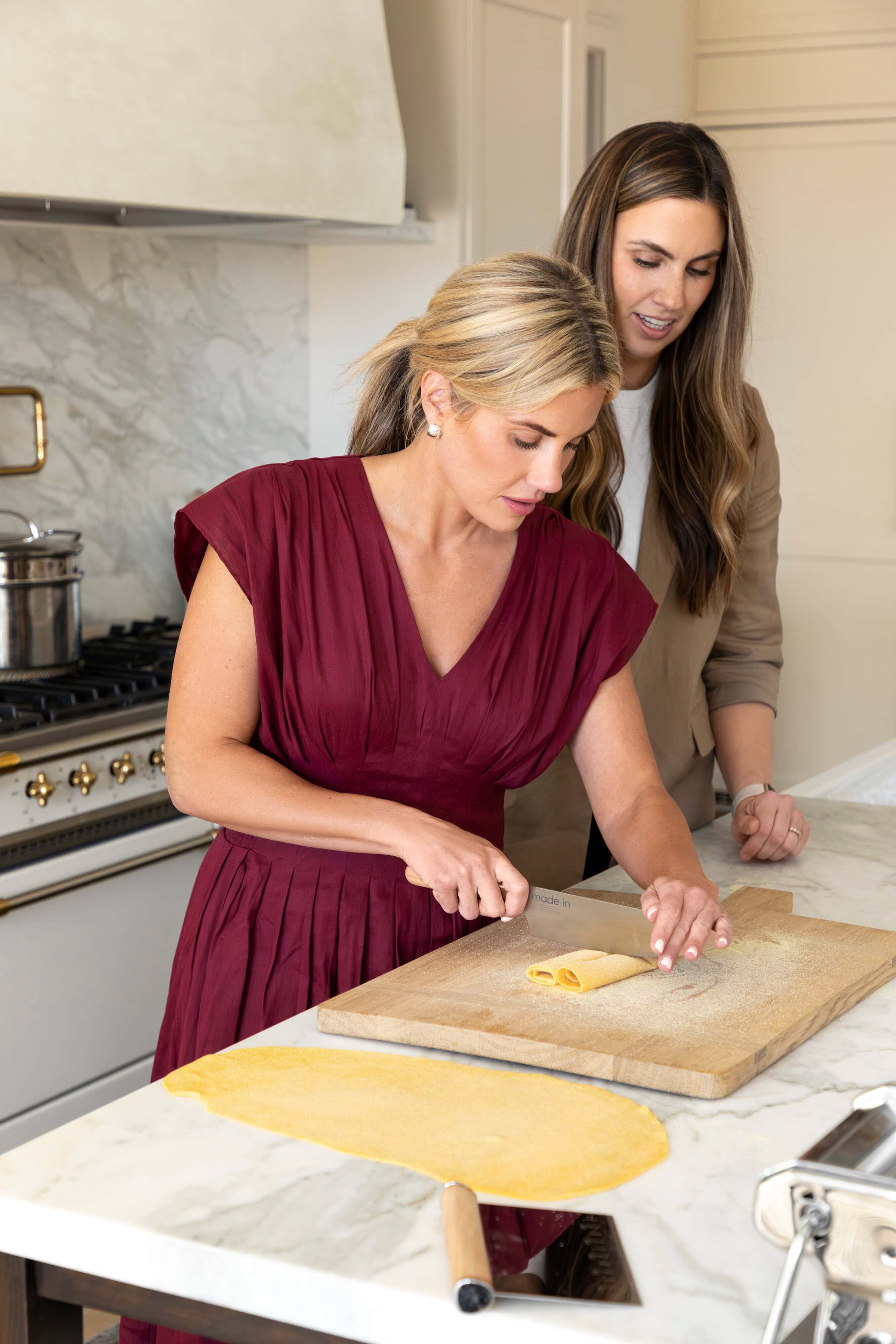
When ready to roll the dough, generously flour your work surface with semolina flour. Divide the dough with a knife or bench scraper into 4 equal porons. Take an individual poron of the dough and use your fingers to press it into a rectangular shape on your floured work surface.
06
At this point, you can either hand-roll the dough or use special equipment to help you roll out each piece. No matter how you do it, use a generous poron of semolina flour to keep the dough from scking both to your work surface and the rolling pin or machinery. If rolling by hand, simply use a rolling pin to roll the dough out on the center and sides unl it’s very thin, rotang frequently as you roll. You’ll know it’s done when the dough is translucent, and you could praccally read a newspaper through it. If using a pasta roller, you’ll want to feed the dough through the machine starng at the largest/widest seng, working your way down, and repeatedly running the dough through the roller unl it’s thin enough to praccally read a newspaper through it as well. Regardless of your rolling method, don’t be afraid to re-apply the semolina flour as needed to prevent the dough from scking. If your pasta tears or forms holes in it, don’t panic—simply press the torn dough together and run it through the pasta roller again. Set the rolled dough aside on a generously floured surface before cung.
07
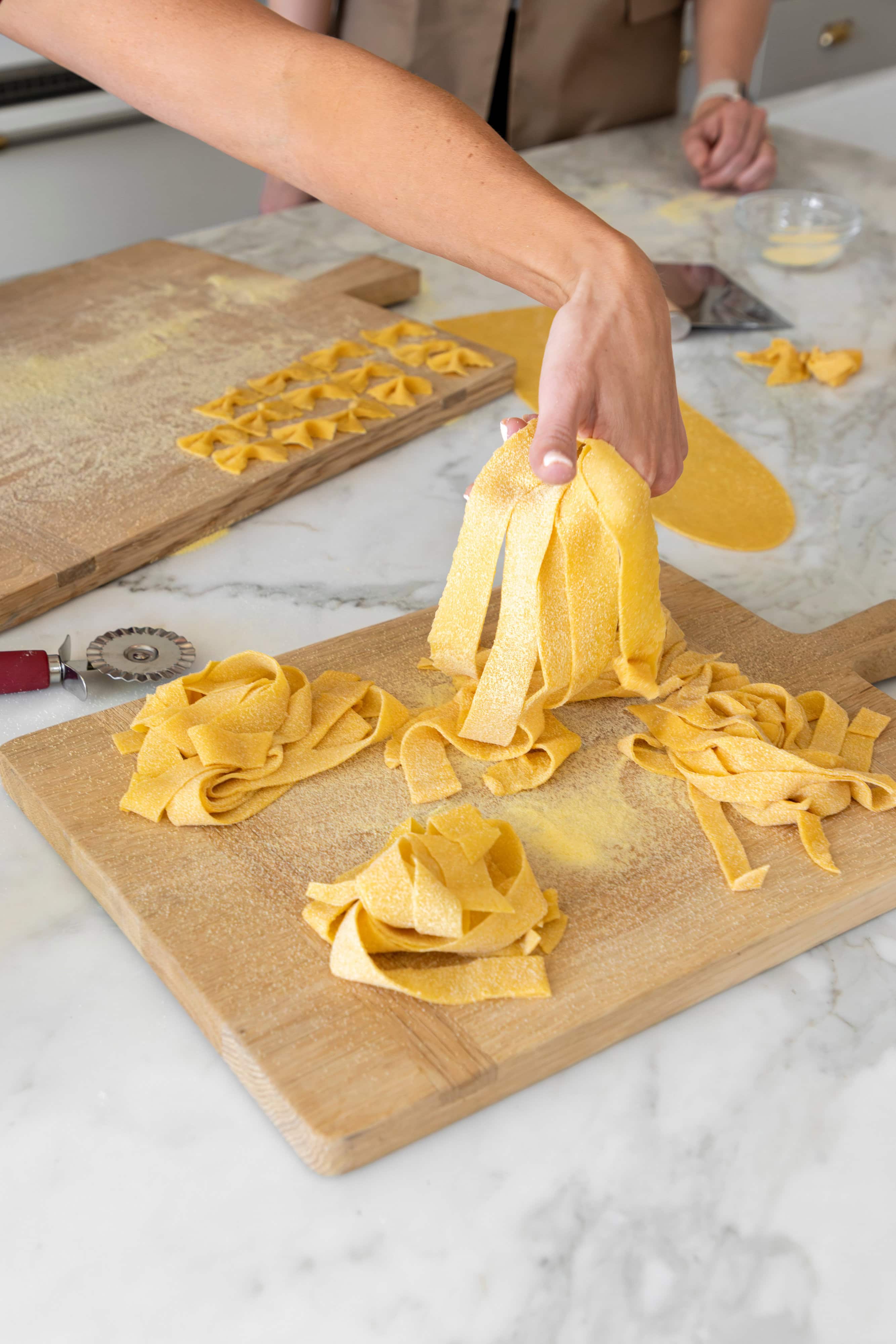
After the dough is rolled out, you’ll have 4 separate pieces that are ready to shape or cut. If needed you can cut these pieces in half. Prior to shaping or cung, generously coat both sides of each sheet of pasta with semolina flour to ensure the pieces don’t sck to each other. For the most simple shapes like pappardelle or 8. fettuccine, simply cut the dough into strips, either by hand or using equipment. For a bowe (farfalle) shape, cut the sheets of pasta into squares using a pasta cutter, and pinch the top and bottom of each square toward the center to create a bowe shape.
08
Bring a large pot of water to a boil and salt generously with kosher salt unl water is salty like the sea. Cook the pasta for 1-2 minutes maximum, until it’s soft but still has a slight firmness. Reserve pasta water if needed and promptly strain the pasta, combine with sauce, and serve immediately.


You May Also Like